
leggi in italiano
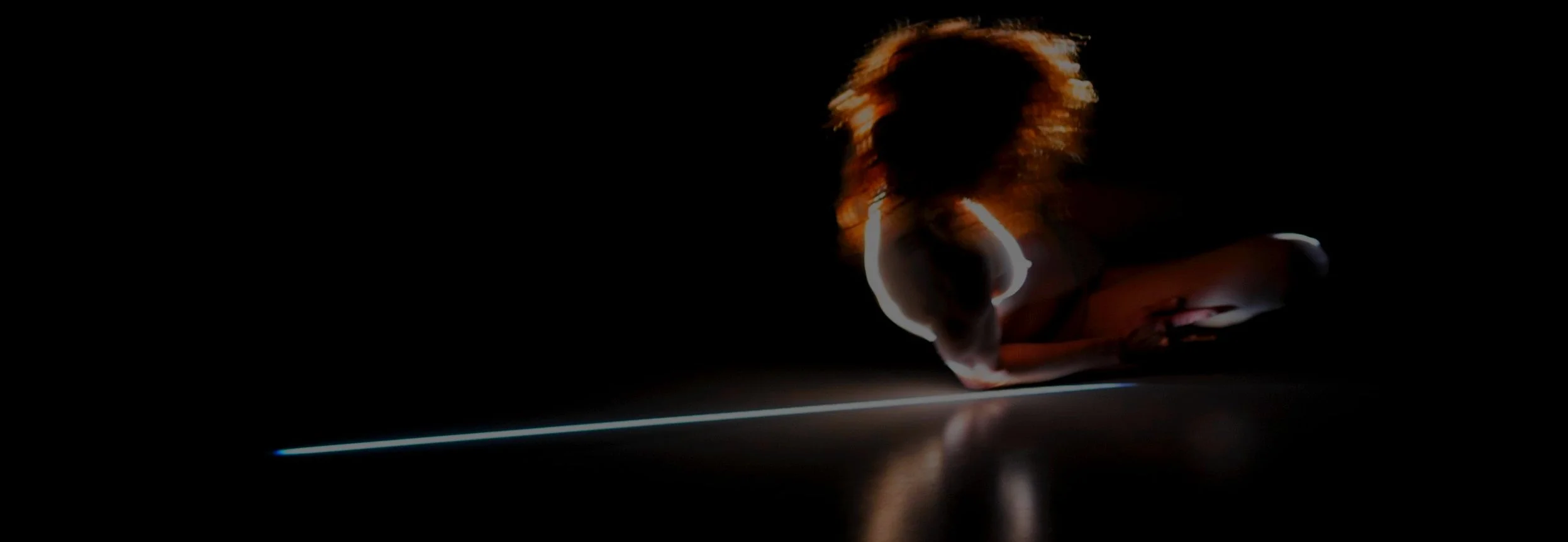
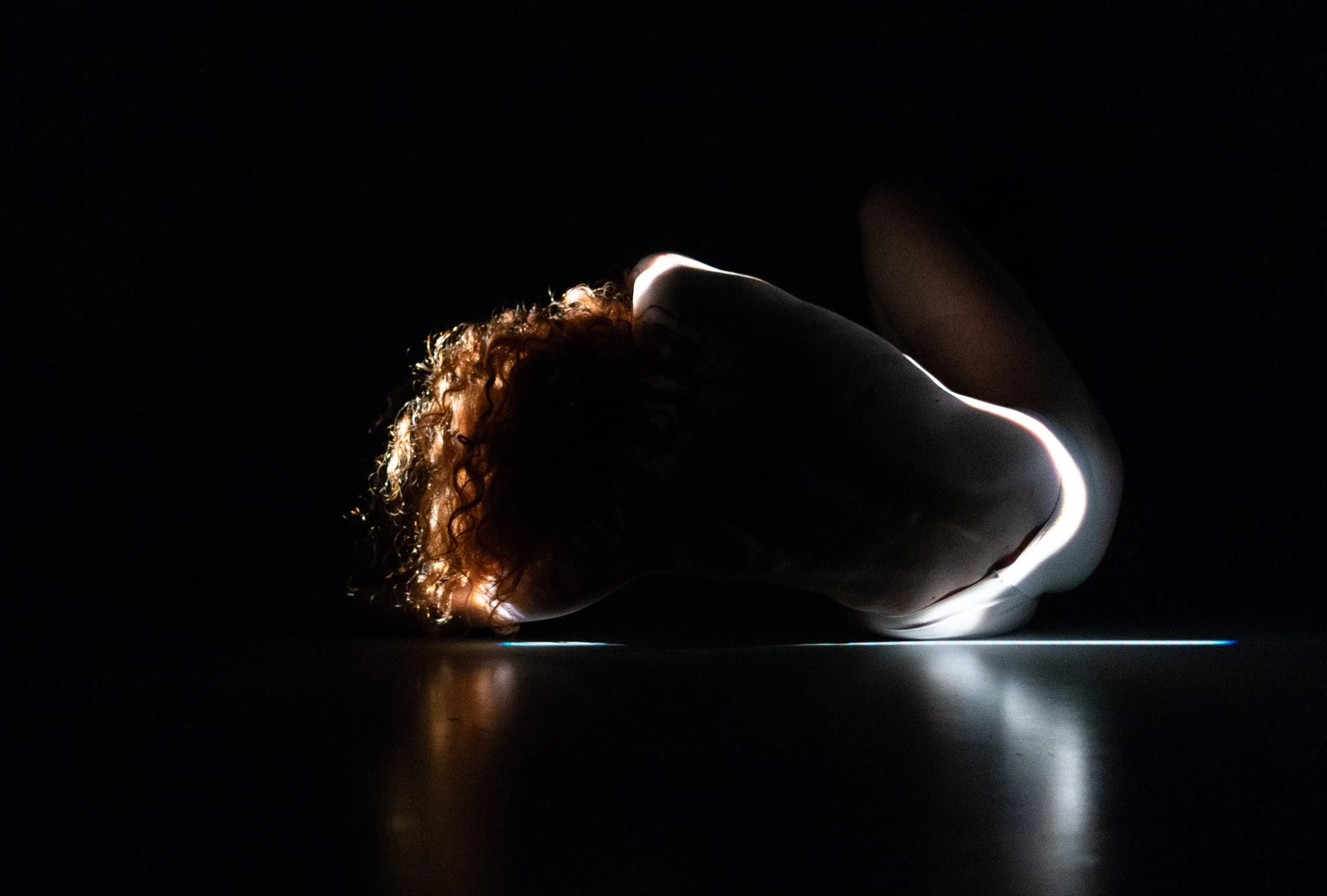
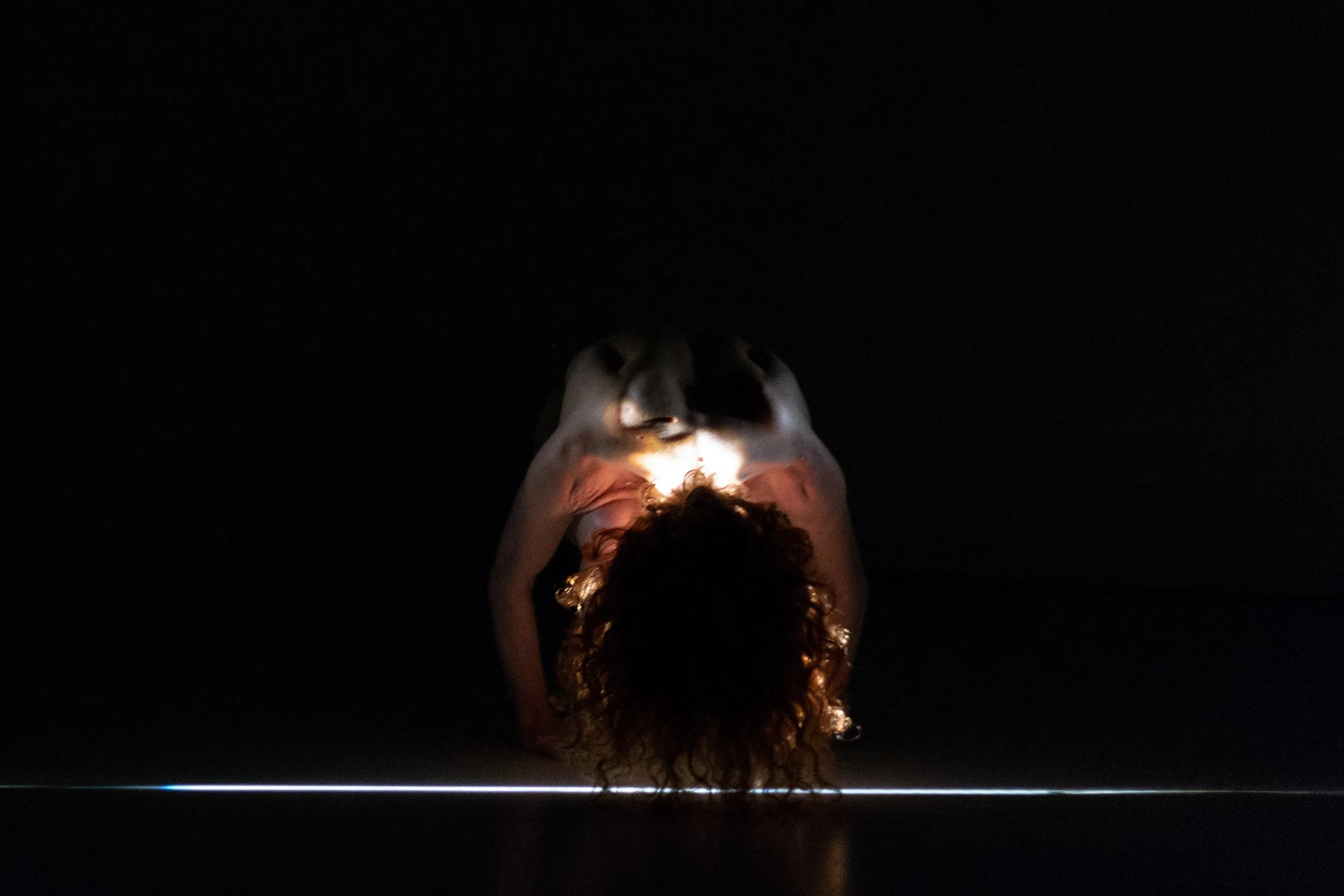
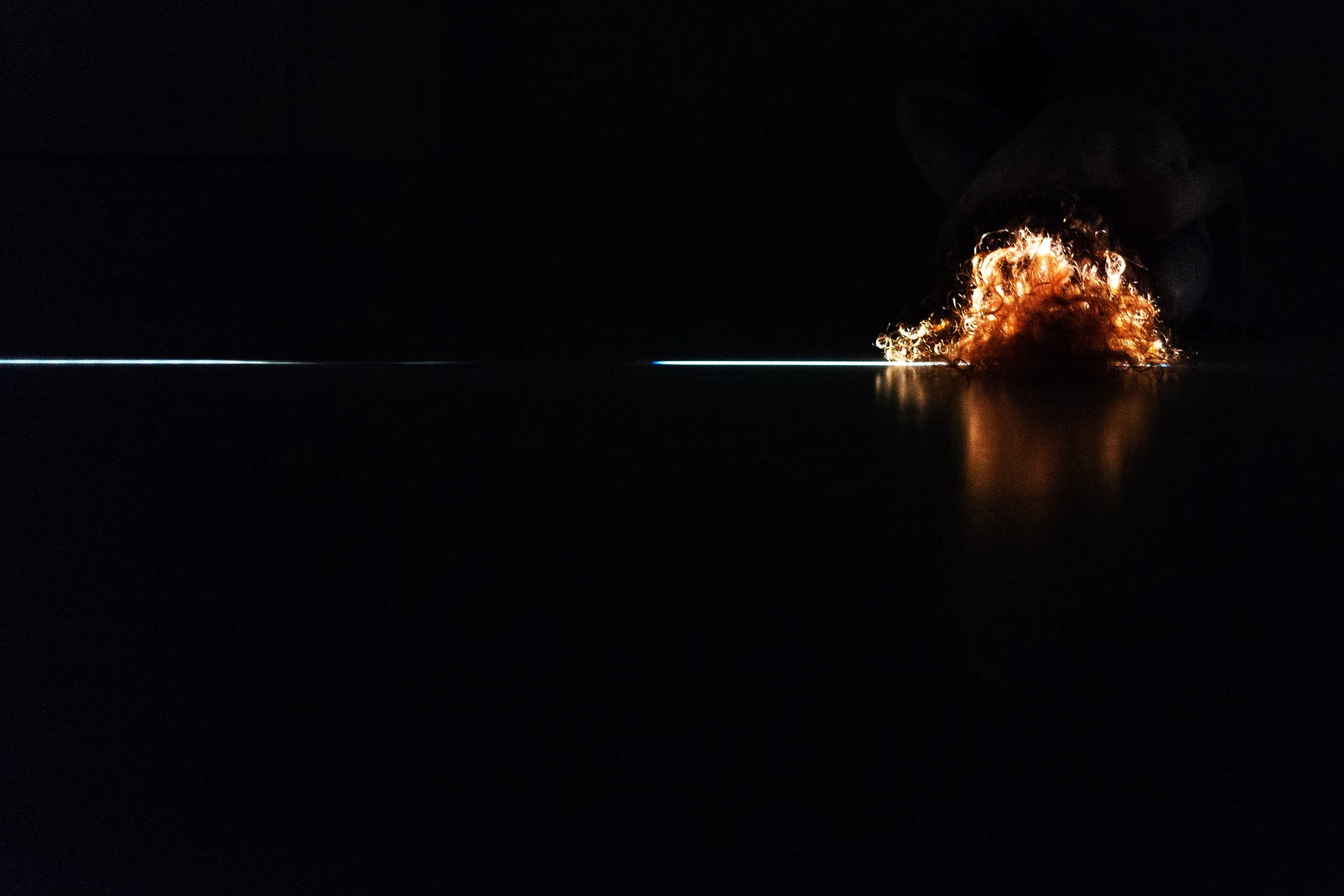
At the core of Corpoluce lies a conceptual and technical device: a thin sheet of light cutting across an empty, darkened space. This ‘wall’ of light remains invisible until it encounters the performer’s body, which reflects it. The encounter establishes the conditions for a direct, one-to-one relationship between body and light.
This device is consistent with my broader conception of theatrical light as an autonomous entity, endowed with its own qualities and vitality—strong, independent, and influential, as light is in reality. Once granted a precise, non-subordinate status, light can enter into a complex dialogical relationship with the other presence on stage, comparable to encounters between distinct identities.
In Corpoluce, the apparatus is confronted by Alessandra Cristiani, dancer and performer with whom I have maintained a long-standing collaboration, who ‘draws’ and ‘moves’ the light through her actions.
I first developed the technique of Corpoluce during a workshop in 2001, and subsequently revisited it in other contexts. The workshop was structured in two sections, respectively titled The Less Light There Is, the More You See and The Fewer Lights You Have, the More You Can Create with Light. These intentionally paradoxical statements were intended to foreground issues I consider central to a poetics of light.
The first paradox drew attention to the depth of darkness, its multiple degrees, and the infinite range of nuances it contains; the second addressed the relationships that light can establish with other elements of creation—body, objects, and space—relationships whose potential complexity and articulation generally receive insufficient attention in common theatrical practice.
The second section of the workshop was also connected to my critical stance towards a widespread attitude in theatre: the tendency to focus more on light sources and instruments in themselves than on the multiplicity of relationships they are capable of generating within space.
All too often, the complexity of a lighting design is understood to depend on the number of fixtures employed, rather than on the quality of the relationships they establish.
Likewise, essential prerogatives of light—such as form and movement—are frequently entrusted to the sources themselves, rather than to the relationships light establishes. This helps to explain the proliferation, in recent decades, of fixtures designed to ‘move’ light (various types of motorised sources) or to project forms (image projectors or profile spotlights).
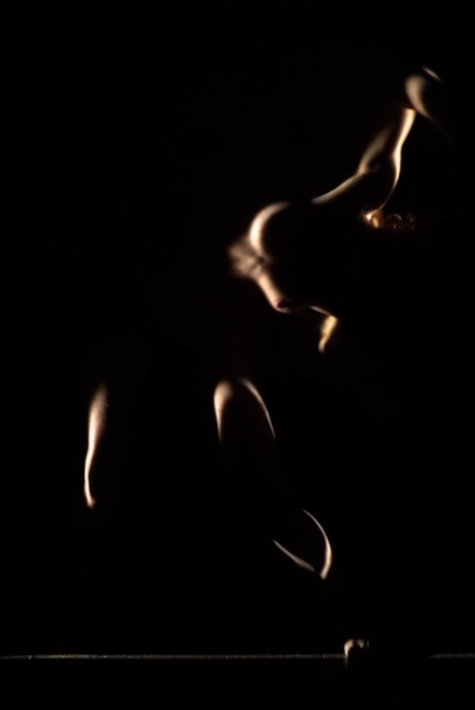
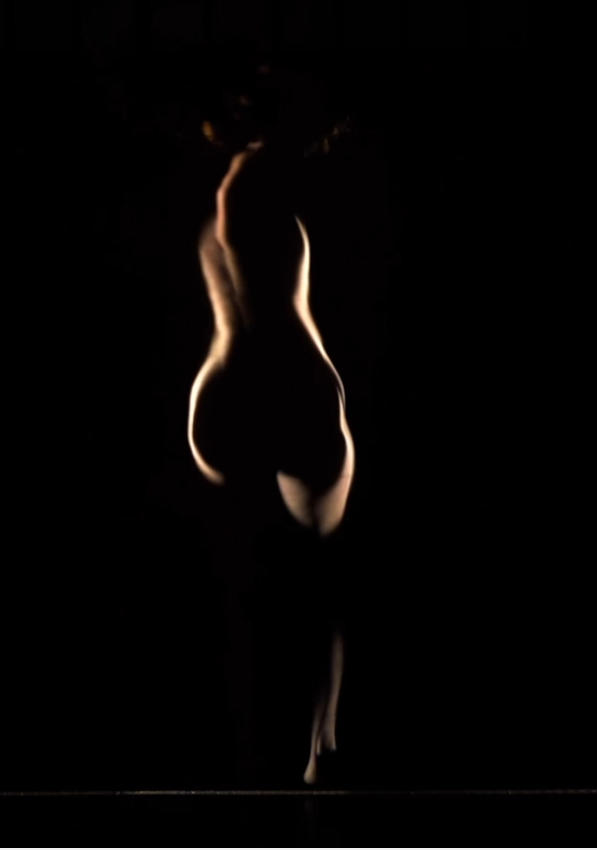
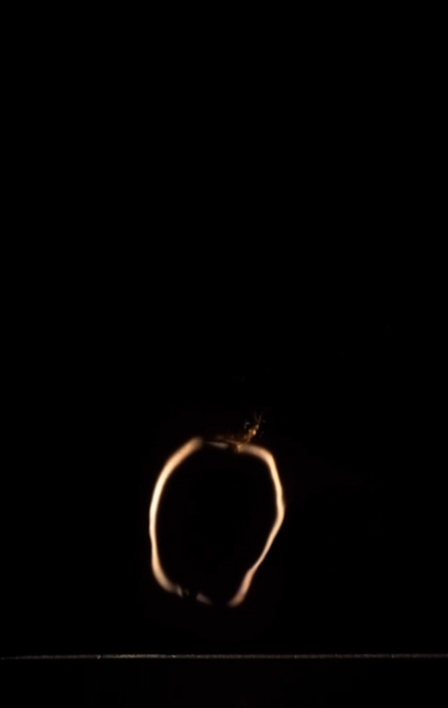
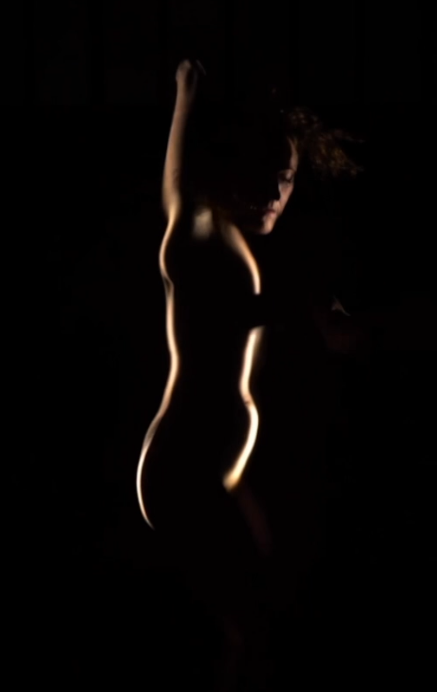
In Corpoluce, only two fixed fixtures are used. Yet the form and movement of light are transformed through their encounter with the body. Two opposing lines of light converge into a virtual plane, only to be broken, bent, and reshaped by the body that intercepts them; in turn, they break, bend, and give form to the body. Light becomes body. Body becomes light.
This technique underpins the entire performance and, perhaps for this very reason, acquires an emblematic value in relation to the broader issues outlined here—particularly the tendency to privilege instruments and their quantity over the relationships that any single light can generate.
Within this framework, scarcity and fixity of means do not constitute limitations; rather, they become multipliers of possibility.
Performance details:
Corpoluce (45’)
by Fabrizio Crisafulli and Alessandra Cristiani
Concept and lighting design: Fabrizio Crisafulli
Dance: Alessandra Cristiani
Music and sound design: Ivan Macera
(in collaboration with Francesco Diodati and Stefano Calderano)
Assistant: Chiara Era
Video-documentation: Arianna Rossini
Photo: Chiara Era
Rome, MACRO – Museum of Contemporary Art of Rome, 23 December 2018.
By Fabrizio Crisafulli read also Dramaturgy of Light in Theatre