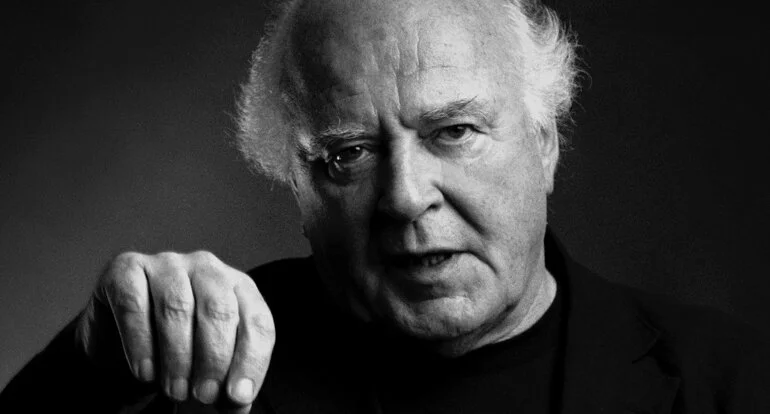
"Moonwatcher: A Personal Odyssey". Conversation with director Hans Pfleiderer

"Moonwatcher: A Personal Odyssey". Conversation with director Hans Pfleiderer

Hans Pfleiderer is a filmmaker and engineer. He studied architecture at the Technical University Berlin with a diploma. He worked as a stage and lighting designer with Eric Veenstra from ArtLab Studios Berlin. He completed a Master program in Production Design at the American Film Institute and assisted legendary production designer Robert Boyle. As a visual consultant, he worked for the documentary The Man on Lincoln’s Nose, which was nominated for an Oscar in the category Documentary Shorts in 2001. He designed the Broadcast Studio for James Cameron's Earthship.TV, the feature films L.A. Twister, A House on a Hill, and many more. He was Visual Effects Designer and creator of digital storyboards on Minority Report, Panic Room and Supervisor on commercials and music videos. He worked as a project manager and in various other functions for ARRI designing broadcast lighting systems. In 2018 he founded his German production company Hans Pfleiderer Engineering. As a director, he recently completed the feature documentary Moonwatcher: A Personal Odyssey about Dan Richter, best known for his work with Stanley Kubrick as choreographer and star in the legendary opening scene of 2001: A Space Odyssey released in 1968. Sir Arthur C. Clarke, author of 2001 said about him: «Dan is the most famous unknown actor in the world».

Il tempo con Antonioni. Conversazione con Edoardo Ponti

Il tempo con Antonioni. Conversazione con Edoardo Ponti

Edoardo Ponti (Ginevra, 1973), figlio di Sophia Loren e del produttore Carlo Ponti, è regista, sceneggiatore e produttore, saltuariamente anche attore. Nel 2002 esordisce al cinema con Cuori estranei, proseguendo la sua carriera con Coming & Going ed i premiati cortometraggi Away We Stay, Il turno di notte lo fanno le stelle, dall’omonimo racconto di Erri De Luca, e Voce umana, da Jean Cocteau, presentato a Venezia. Il suo film più recente, La vita davanti a sé, tratto dall’omonimo romanzo di Romain Gary e interpretato da Sophia Loren e Renato Carpentieri, è stato uno dei maggiori successi di Netflix nel 2020 ed è stato candidato ai Golden Globe come Miglior film straniero. Nella seconda metà degli anni ’90 Edoardo Ponti è stato l'assistente personale di Michelangelo Antonioni, appena insignito del premio Oscar alla carriera, per la realizzazione di due progetti poi sfumati: Tanto per stare insieme, fortemente desiderato anche da Jack Nicholson, e il fantascientifico Destinazione: Verna, che avrebbe visto Sophia Loren protagonista.

The Time with Antonioni. Conversation with Edoardo Ponti

The Time with Antonioni. Conversation with Edoardo Ponti

Edoardo Ponti (Geneva, 1973), son of Sophia Loren and producer Carlo Ponti, is a director, screenwriter and producer, occasionally also an actor. In 2002 he made his debut in the cinema with Extraneous Hearts, continuing his career with Coming & Going and the award-winning short films Away We Stay, The Night Shift the Stars Do It, from the homonymous story by Erri De Luca, and Human Voice, by Jean Cocteau, presented in Venice. His most recent film, The Life Ahead, based on Romain Gary's novel of the same name and starring Sophia Loren and Renato Carpentieri, was one of Netflix's biggest hits in 2020 and was nominated for a Golden Globe for Best Foreign Film. In the second half of the 90s, Edoardo Ponti was the personal assistant of Michelangelo Antonioni, who had just been awarded the Academy Award for Lifetime Achievement, for the realization of two projects that were later faded: Just to Be Together, strongly desired also by Jack Nicholson, and the science fiction Destination: Verna, which would have seen Sophia Loren protagonist.

Esce "Il nero di Giovanni Vento. Un film e un regista verso l’Italia plurale". Conversazione con Leonardo De Franceschi

Esce "Il nero di Giovanni Vento. Un film e un regista verso l’Italia plurale". Conversazione con Leonardo De Franceschi

Leonardo De Franceschi insegna Storia del cinema all’Università Roma Tre. Si interessa di produzioni audiovisuali riconducibili a soggetti e gruppi subalterni, diasporici e transnazionali e dei modi di negoziazione della narrazione nazionale dominante in Italia. Ha pubblicato numerosi saggi sul cinema del Terzo mondo e del colonialismo, fra cui Lo schermo e lo spettro. Sguardi postcoloniali su Africa e afrodiscendenti (Mimesis Edizioni, 2018). Nel 2020 ha presentato al Festival di Torino un restauro da lui promosso del film Il nero di Giovanni Vento del 1967, “film perduto” del cinema italiano incentrato sul fenomeno dei “figli della Madonna”, vale a dire dei figli dei soldati afroamericani venuti a combattere a Napoli alla fine della Seconda Guerra Mondiale. Esce ora per Artdigiland il suo saggio Il nero di Giovanni Vento. Un film e un regista verso un’Italia plurale, analisi e storia del film e del suo restauro.

La luce è invisibile. Vediamo solo la luce riflessa dal mondo. Conversazione con Christian Berger

La luce è invisibile. Vediamo solo la luce riflessa dal mondo. Conversazione con Christian Berger

Christian Berger (AAC, BVK), austriaco, membro onorario dell'AIP, è un cinematographer, regista, sceneggiatore e produttore di numerosi documentari, film per la tv e lungometraggi. Come cinematographer ha lavorato, tra i tanti, per registi quali Michael Haneke, Amos Gitai, János Szász, Angelina Jolie, Terrence Malick. Nel 2010 è stato nominato al premio Oscar per la migliore fotografia per Il nastro bianco diretto da Michael Haneke e ha vinto l’ASC Award per la migliore fotografia per lo stesso film. Berger ha sviluppato il sistema “Cine Reflect Lighting System” (CRLS) in collaborazione con Bartenbach Lichtlabor: oltre a creare nuove possibilità estetiche per la camera, questo sistema offre ad attori e registi una flessibilità e una libertà senza precedenti. È sposato con l'attrice Marika Green ed è zio di Eva Green.

Light Is Invisible. We Only See the Light Reflected from the World. Conversation with Christian Berger

Light Is Invisible. We Only See the Light Reflected from the World. Conversation with Christian Berger

Christian Berger (AAC, BVK, AIP Honorary Member) is an Austrian cinematographer, director, producer, and writer of numerous documentaries, made-for-tv films, and features. As a cinematographer, he worked, among many, for directors as Michael Haneke, Amos Gitai, János Szász, Angelina Jolie, Terrence Malick. In 2010 Berger was nominated for an Academy Award for Best Cinematography for his work on The White Ribbon directed by Michael Haneke and won the ASC Award for Best Cinematography for the same movie. Berger developed the new “Cine Reflect Lighting System” (CRLS) in collaboration with Christian Bartenbach: in addition to creating new esthetic possibilities for the camera, this system gives actors and directors unprecedented flexibility and freedom. He is married to actress Marika Green and is also the uncle of Eva Green.

Il mondo degli effetti speciali. Conversazione con il premio Oscar Bruce Nicholson

Il mondo degli effetti speciali. Conversazione con il premio Oscar Bruce Nicholson

Intervista con Bruce Nicholson (VES AMPAS), tra i più importanti artisti degli effetti speciali del cinema americano. Nato e cresciuto a Los Angeles, Nicholson ha vinto due premi Oscar: per L’impero colpisce ancora (1980) e I predatori dell’arca perduta (1981).

The special effects world. Conversation with Academy Award winner Bruce Nicholson

The special effects world. Conversation with Academy Award winner Bruce Nicholson

Interview with Bruce Nicholson (VES AMPAS), among the most important visual effects supervisors of American cinema. He was born and raised in Los Angeles. Nicholson has won two Academy Awards for The Empire Strikes Back (1980) and Raiders of the Lost Ark (1981).

Ricordando Ruth Orkin nel centenario della nascita. Conversazione con Mary Engel, direttrice dell’Orkin / Engel Film and Photo Archive

Ricordando Ruth Orkin nel centenario della nascita. Conversazione con Mary Engel, direttrice dell’Orkin / Engel Film and Photo Archive

Mary Engel, pluripremiata regista, è figlia dei grandi fotografi Ruth Orkin e Morris Engel e direttrice e archivista dell’Orkin / Engel Film and Photo Archive. Il suo primo documentario Ruth Orkin: Frames of Life è stato presentato in anteprima al Sundance Film Festival nel 1996 ed è stato selezionato dall'Academy of Motion Picture Arts and Sciences come uno dei "documentari eccezionali del 1996". È co-produttrice del remake del film Piccolo fuggitivo diretto dai suoi genitori. Ha pubblicato tre cataloghi fotografici: Ruth Orkin A Retrospective (1995), Morris Engel Early Work (1999) e Ruth Orkin Above and Beyond (1999). Recentemente ha fondato l’American Photography Archive Group (APAG) che comprende oltre 30 archivi fotografici.

Remembering Ruth Orkin’s Centenary of the Birth. Conversation with Mary Engel, director of Orkin/Engel Film and Photo Archive

Remembering Ruth Orkin’s Centenary of the Birth. Conversation with Mary Engel, director of Orkin/Engel Film and Photo Archive

Mary Engel, an award winning filmmaker, is the daughter of the great photographers Ruth Orkin and Morris Engel and the director and archivist of the Orkin/Engel Film and Photo Archive. Her first film Ruth Orkin: Frames of Life premiered at the Sundance Film Festival in 1996 and selected by the Academy of Motion Picture Arts and Sciences as one of the “Outstanding Documentaries of 1996.” She is a co-producer on the remake of the feature film Little Fugitive, directed by her parents (1953). She has published three catalogs of photography: Ruth Orkin A Retrospective (1995), Morris Engel Early Work (1999) and Ruth Orkin Above and Beyond (1999). She also recently founded the American Photography Archive Group (APAG) which is comprised of over 30 photography archives that are handled by a family member.

Pino Pinori ci ha lasciati. Ma continua a parlarci della luce

Pino Pinori ci ha lasciati. Ma continua a parlarci della luce

Ci ha lasciati oggi Giuseppe Pinori grande direttore della fotografia ma soprattutto grandissimo amico. Vogliamo ricordarlo con la sua stessa voce, con la bellissima introduzione che ha scritto per il suo volume La luce come compagna.

Arte, magia e cinematografia. Conversazione con il premio Oscar Scott Farrar, mago degli effetti speciali

Arte, magia e cinematografia. Conversazione con il premio Oscar Scott Farrar, mago degli effetti speciali

Scott Farrar è tra i più importanti supervisori di effetti speciali del cinema americano. È stato nominato al Premio Oscar per sei volte, trionfando per Cocoon (1985) diretto da Ron Howard. Nella sua filmografia trovano posto film come Star Trek: The motion picture, la trilogia di Ritorno al futuro, Chi ha incastrato Roger Rabbit, Jurassic Park, Star Wars: Episodio I - La minaccia fantasma, Deep Impact, A.I. Artificial Intelligence, Minority Report, Le cronache di Narnia - Il leone, la strega e l'armadio e la serie Transformers. È membro VES, ASC, DGA, AMPAS.

Art, Magic and Cinematography. Conversation with the Visual Effects Magician and Oscar Winner Scott Farrar

Art, Magic and Cinematography. Conversation with the Visual Effects Magician and Oscar Winner Scott Farrar

Scott Farrar is among the most important visual effects supervisors of American cinema. He has been nominated for an Academy Award six times, winning once for Cocoon (1985) directed by Ron Howard. In its incredible filmography, films such as Star Trek: The motion picture, Back to the Future trilogy, Who Framed Roger Rabbit, Jurassic Park, Star Wars: Episode I - The Phantom Menace, Deep Impact, A.I. Artificial Intelligence, Minority Report, The Chronicles of Narnia: The Lion, the Witch and the Wardrobe and the Transformers film series. He is a member of VES, ASC, DGA, AMPAS.

Il mestiere dell’operatore. Conversazione con Peter Cavaciuti

Il mestiere dell’operatore. Conversazione con Peter Cavaciuti

Peter Cavaciuti (SOC-ACO-Assoc BSC) was born in London to an Irish mother and father of Italian heritage. He is among the best camera and Steadicam operator in the world. Cavaciuti worked with directors such as Stanley Kubrick, Martin Scorsese, William Friedkin, Tim Burton, Denis Villeneuve and Sam Mendes. In 2017 he won The Operators Award for the film Allied, directed by Robert Zemeckis.

The Profession of the Camera Operator. Conversation with Peter Cavaciuti

The Profession of the Camera Operator. Conversation with Peter Cavaciuti

Peter Cavaciuti (SOC-ACO-Assoc BSC) was born in London (to an Irish mother and father of Italian heritage. He is among the best camera and Steadicam operator in the world. Cavaciuti worked with directors such as Stanley Kubrick, Martin Scorsese, William Friedkin, Tim Burton, Denis Villeneuve and Sam Mendes. In 2017 he won The Operators Award for the film Allied, directed by Robert Zemeckis.

Viaggio in pellicola nei territori dell'arte. Conversazione con Lucille Carra

Viaggio in pellicola nei territori dell'arte. Conversazione con Lucille Carra

Lucille Carra è nata a Manhattan, New York City. È regista, produttrice e scrittrice. Ha conseguito un BFA in produzione cinematografica e un master in cinema presso la Tisch School of the Arts della New York University. Carra ha lavorato nella distribuzione e nell'archiviazione di film internazionali, comprese le collezioni di diversi cineasti giapponesi. Attraverso la sua compagnia, Travelfilm, ha prodotto, diretto e scritto documentari culturali acclamati dalla critica su scala internazionale come The Inland Sea, Dvorak and America, The Last Wright.

A film journey in the territories of art. Conversation with Lucille Carra

A film journey in the territories of art. Conversation with Lucille Carra

Lucille Carra was born in Manhattan, New York City. She is an american documentary film director, producer, and writer. She holds a BFA in Film Production and an MA in Cinema Studies from New York University's Tisch School of the Arts. Carra has worked in the distribution and archiving of international films, including the collections of several master Japanese filmmakers. Through her company, Travelfilm, she has produced, directed and written critically acclaimed cultural documentaries on an international scale as The Inland Sea, Dvorak and America, The Last Wright.

Tra pittura e fotografia: conversazione con Benoit Delhomme

Tra pittura e fotografia: conversazione con Benoit Delhomme

Benoît Delhomme (Parigi, 28 agosto 1961) è un cinematographer francese. È stato nominato ai Premi César per la miglior Cinematografia nel 1998 con il film Artemisia - Passione estrema diretto da Agnès Merlet. Tra i suoi film: Il caso Winslow (1999), diretto da David Mamet, Il bambino con il pigiama a righe (2008), diretto da Mark Herman, Wilde Salomé (2011) scritto, diretto e interpretato da Al Pacino, La teoria del tutto (2014), diretto da James Marsh, Van Gogh - Sulla soglia dell'eternità (2018) sugli ultimi anni di vita di van Gogh, diretto da Julian Schnabel, e Minamata (2020), diretto da Andrew Levitas, con Johnny Depp.

Between Painting and Cinematography: Conversation with Benoit Delhomme

Between Painting and Cinematography: Conversation with Benoit Delhomme

Benoît Delhomme (Paris, 28 August 1961) is a French film cinematographer. He was nominated for the César Award for Best Cinematography in 1998 for Artemisia directed by Agnès Merlet. Among his films to remember: The Winslow Boy a 1999 period drama film directed by David Mamet, The Boy in the Striped Pyjamas a 2008 British-American historical tragedy film written and directed by Mark Herman, Wilde Salomé a 2011 American docudrama written, directed by, and starring Al Pacino, The Theory of Everything a 2014 biographical drama film directed by James Marsh, At Eternity's Gate a 2018 biographical drama film about the final years of painter Vincent van Gogh's life directed by Julian Schnabel and Minamata a 2020 drama film directed by Andrew Levitas starring Johnny Depp.

L’importanza di avere un sogno e di poterlo condividere. Conversazione con Fabio Nunziata sulla collaborazione con Abel Ferrara (seconda parte)

L’importanza di avere un sogno e di poterlo condividere. Conversazione con Fabio Nunziata sulla collaborazione con Abel Ferrara (seconda parte)

Fabio Nunziata (Cosenza, 1965) è un montatore italiano. Diplomatosi in montaggio presso il Centro Sperimentale di Cinematografia nel 1987, dopo alcune prime esperienze come montatore, nel 1996 presenta al Festival di Torino il lungometraggio Il caricatore, co-diretto da Nunziata con Eugenio Cappuccio e Massimo Gaudioso, per il quale viene candidato assieme ai colleghi al Nastro d’argento al miglior regista esordiente. Dopo aver diretto assieme a Cappuccio e Gaudioso anche La vita è una sola, si dedica esclusivamente al montaggio. Nel 2004 viene candidato al Nastro d’argento per il suo lavoro ne Il ritorno di Cagliostro di Ciprì e Maresco. Ha continuato a collaborare come montatore con Cappuccio (Uno su Due, Se sei così) e con Gaudioso (Un paese quasi perfetto). La sua filmografia si distingue per una lunga collaborazione con Abel Ferrara: per il regista newyorkese Nunziata ha curato infatti il montaggio di numerosi film: Mary (2005), premiato con il Leone d’Argento al Festival di Venezia, i controversi Go Go Tales (2007) e Pasolini (2014), i documentari Napoli Napoli Napoli (2009), Alive in France (2017), Piazza Vittorio (2017) e The Projectionist (2019). Nunziata ha montato anche gli ultimi due film di Ferrara, Tommaso e Siberia, dittico con protagonista Willem Dafoe, presentati l’uno al Festival di Cannes del 2019 e l’altro al Festival di Berlino del 2020.